
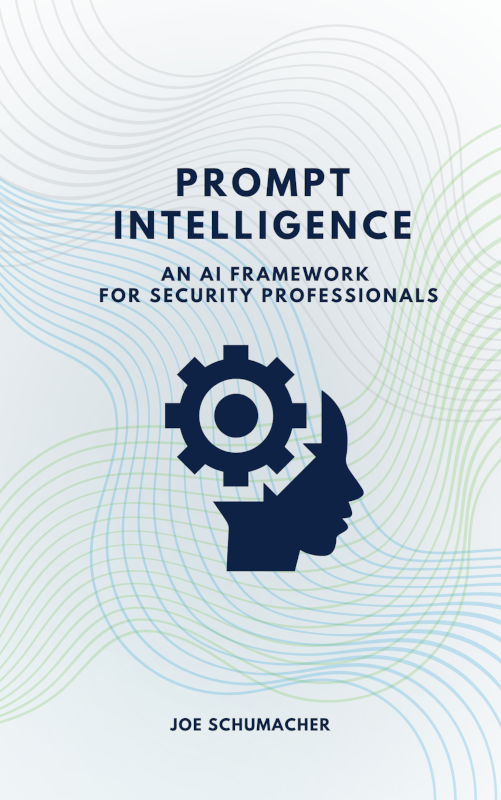
Prompt Intelligence
Make AI Work for You, Not Against You
Security work operates under an asymmetric threat that shapes everything we do in cyber. Attackers only need to succeed once, whereas we must succeed every time. This fundamental imbalance doesn't change with AI. If anything, it becomes more pronounced.
After more than twenty years in the cybersecurity field, I've witnessed various technologies evolve from experimental to embedded reality, but nothing like AI. Analysts use chatbots for log analysis. Engineers leverage AI for code review. Threat hunters accelerate research with AI assistance. Meanwhile, adversaries use the same tools to scale reconnaissance and craft attacks. AI isn't coming to security; it's already here, shaping outcomes whether we engage thoughtfully or not.
The Problem
Casual AI Use
Security professionals are pasting logs into ChatGPT, trusting AI-generated detection rules, and making critical decisions based on unverified outputs.
Generic Doesn't Work
"Prompt engineering tips" ignore security context, verification requirements, and the consequences of getting it wrong.
Framework for Teams
Organizations lack systematic approaches for responsible AI integration that is leaving teams to figure it out through trial and error.
The Framework
Prompt Intelligence teaches you to engineer AI interactions using four core principles:
Context
is King
Provide sufficient context for useful outputs without exposing sensitive data. Precautions that protects security using AI assistance.
Specificity Drives Accuracy
Define precise requirements for format, scope, and depth. Vague prompts produce generic outputs, specificity produces actionable results.
Structure Enables Clarity
Organize complex prompts into phases. Separate analytical work from synthesis. Structure both inputs and expected outputs.
Iteration Reveals Truth
Refine systematically based on verification to build understanding progressively. Learn when to iterate versus when to start fresh.
Who This Is For
GRC Professionals
Learn to manage AI governance, develop compliant policies, assess third-party AI risks, and integrate AI into compliance workflows without losing control.
Blue Team / Defense
Use AI for log analysis, detection engineering, threat hunting, and incident response while maintaining verification discipline that security demands.
Red Team / Offense
Leverage AI for reconnaissance, attack planning, and reporting within ethical boundaries and legal constraints that define professional offensive work.
Get Your Free Sample Chapter
Chapter 5 serves as a critical bridge between foundational concepts and practical application, establishing the non-negotiable boundaries for AI use in cybersecurity before diving into technique. The chapter identifies situations where AI tools may pose risks, such as in critical incident response or legal compliance, and presents alternatives that maintain AI's value within safe boundaries.
Most importantly, it helps readers avoid investing time in advanced prompting techniques for tasks that require human judgment, ensuring the four principles (context, specificity, structure, iteration) are applied only when AI assistance is suitable and safe.
About the Author
Joe Schumacher brings over 20 years of cybersecurity experience across roles spanning analyst, consultant, incident commander, and virtual CISO. As founder of Focused Hunts, LLC, he specializes in threat hunting and advisory services.
GIAC Certified Forensics Analyst (GCFA) | Certified Information Systems Security Professional (CISSP)
Ready to Use AI Effectively in Security Work?
The eBook and paperback are available on Amazon and Ingram Sparks.
Get the complete framework along with the GitLab repository of security-focused starter prompts.